

Beyond Ordinary Sheets: How Indian Aluminium Sheet Manufacturers Support Modern Industries
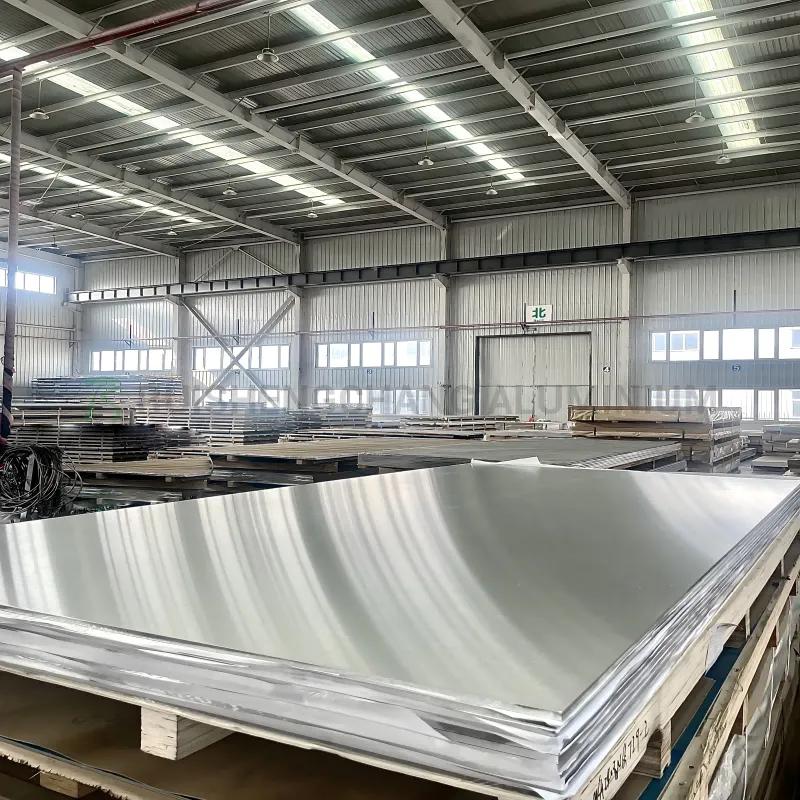
There is a constant demand for materials that are strong, flexible, durable and inexpensive, yet still lightweight for use in modern industries. Aluminium sheets have become of significant importance since they can fulfil several of these requirements in the construction, architectural, transportation, engineering, manufacturing and industrial fabrication fields. Beyond Ordinary Sheets: How Indian Aluminium Sheet Manufacturers in India Support Modern Industries highlights the role of the Indian aluminium sheet manufacturers in the current industrial supply chain.
The choice of sheet material can impact project quality, installation time, maintenance needs and overall project budgets for construction heads, architects, contractors and procurement managers. Aluminium sheets come in various grades, thickness, width and finishes, and can be used for both functional and aesthetic applications.
Indian manufacturers fulfil this demand by providing aluminium sheet for regular and custom-made demands. They are not just in the business of making flat products of metal. They aid industries to determine appropriate grades, organize specific dimensions, supply quality documentation, and supply material for projects where consistency and reliability are paramount.
Why Aluminium Sheets Are Used Across Modern Industries
The aluminium's properties are appreciated because of its low density, corrosion protection and workability. Aluminium sheets may be easier to handle and move around than some heavier metals. This can be useful if there is a significant volume of work to be installed or if the work is to be installed in difficult areas.
Important benefits include:
Lightweight construction
Good corrosion resistance
Useful strength-to-weight performance
Easy cutting and fabrication
Availability in different alloy grades
Attractive surface appearance
Good thermal and electrical conductivity
Recyclability
Suitability for customized dimensions
The characteristics of an aluminium sheet vary with alloy, temper, thickness, surface finish and environment in which it is used. Hence, industrial buyers would need to consider the technical specifications of the application in which the material will be used as well as the price.
Aluminium Sheet Grades for Different Requirements
The aluminum material has several advantages, one of which is the availability of different families of aluminium alloys. Every alloy has a specific combination of strength, corrosion resistance, formability, and/or machinability or weldability.
There are several common types of aluminium sheet materials, such as:
Aluminium 1050
Aluminium 1050 is commonly chosen for use where high corrosion resistance, good electrical conductivity and excellent formability are desired. It can be employed in general fabrication, electrical applications and equipment where high structural strength is not the critical factor.
Aluminium 3003
Aluminium 3003 is the best of both worlds; the strength and corrosion resistance are moderate while it is still fairly easy to shape and work. Typically used in general engineering, panels, fabricated parts and equipment.
Aluminium 5052
Aluminium 5052 has a high resistance to corrosion and ease of forming. It may be beneficial in situations with moisture, industrial environments, and challenging manufacturing processes.
Aluminium 6061
Aluminium 6061 is a versatile alloy that finds application for engineering and structural related applications where good machinability and useful mechanical properties are desired. Often used for frames, machine parts, and fabricated assemblies.
Aluminium 7075
Aluminium 7075 is a high strength alloy for more challenging engineering applications. It can be used when strength is a primary consideration, but its use in welding and forming, and resistance to corrosion, should be considered carefully.
How Indian Aluminium Sheet Manufacturers Add Value
The experienced Indian Aluminium Sheet Manufacturers contribute more to industrial projects than the production capacity. They assist customers in procuring materials to their requirements and timeframe.
A dependable manufacturer may provide:
Multiple aluminium alloy options
Standard and customized sheet sizes
Different thickness ranges
Hot-rolled and cold-rolled sheets
Surface finish options
Cut-to-size services
Material test certificates
Inspection and quality control
Protective packaging
Bulk order and export support
For big construction and manufacturing firms, these services could reduce procurement process. By dealing with a single experienced supplier, buyers might find it easier to get several similar specifications than dealing with several different vendors.
This can enhance communication, better reduce purchase delays, and easier to verify the quality.
Aluminium Sheets in Construction and Architecture
Aluminium sheets are applied in the construction industry for functional and aesthetic reasons. Aluminium is a popular material for architects, and it can also be used in contemporary building designs, providing a clean look.
Depending on the grade and design, aluminium sheets may be considered for:
Exterior wall cladding
Roofing components
Ceiling systems
Decorative panels
Partition systems
Door and window components
Interior architectural features
Equipment covers
Building facades
For contractors, light sheets may be more convenient to handle and install. But the chosen sheet should be suitable for the anticipated wind forces, weather conditions, fire needs, fastening requirements and building design.
Surface finish and appearance may also be important for architectural applications. When installing sheets over large areas that have to be exposed, a consistent finish may be important.
Applications in Engineering and Manufacturing
Apart from buildings, aluminium sheets are being regarded as a vital part of engineering and industrial production. Their workability and performance make them useful for cutting, bending, drilling and machining.
Typical applications include:
Industrial machine covers
Electrical cabinets
Transportation components
Storage tanks and containers
Heat transfer equipment
Automotive parts
Aerospace-related components
Chemical processing equipment
Fabricated industrial panels
Material uniformity is critical in manufacturing. The thickness, flatness, surface quality, and chemical composition may vary which can impact production efficiency. Hence, it is important to collaborate with aluminium sheet manufacturers in India who adhere to proper inspection and documentation procedures.
The Importance of Thickness, Size, and Tolerance
There's more to choosing an aluminium sheet than picking the alloy. Thickness and dimensions also affect performance & fabrication.
Before ordering, procurement teams should confirm:
Required alloy and temper
Sheet thickness
Length and width
Flatness requirements
Dimensional tolerances
Surface finish
Cutting requirements
Packaging method
Quantity and delivery schedule
Required inspection certificates
The thickness will be determined by design requirements and anticipated loads for construction projects. The thickness for fabricated parts can vary depending on bend, machine, join and the final product dimensions.
Clear specifications minimize mis-deliveries and re-work.
Quality Control in Aluminium Sheet Production
Quality control is one of the key steps in the production of aluminium sheets. Industrial customers may need uniform material properties since their product and structure are based on the expected reliability.
Quality checks may include:
Chemical composition verification
Thickness measurement
Dimensional inspection
Surface inspection
Hardness testing
Tensile testing
Flatness checks
Visual examination
Certificate verification
Specific tests will vary by alloy, standard and end use application. Buyers are advised that for critical projects, they should ask for the relevant material certificates and inspection reports before accepting the shipment.
Quality control can be a proper storage and packaging. When transporting aluminium sheets, they must be protected from the elements of scratching, moisture, contamination and damage.
Sustainability and Long-Term Material Value
The recyclability of aluminium is well known. If collected and processed correctly, aluminium can be recycled and can be put to use in new products. This feature is beneficial to industries that are striving for more responsible management of materials.
It also has a relatively low weight which can help to minimize transportation requirements in some applications. Moreover, aluminium's corrosion resistance may also help to extend the service life if the suitable alloy and surface treatment are used.
But sustainability can be considered through entire life cycle of the product from raw material production, to manufacture, to transportation, to use, to maintenance, to recycling.
Selecting a Reliable Aluminium Sheet Supplier
In large scale industrial and construction projects, the selection of suppliers can make a direct contribution towards project continuity. The supplier should be reliable and able to communicate and maintain quality of material.
When selecting a supplier to look at:
Manufacturing experience
Available alloy grades
Production and stock capacity
Quality assurance process
Customization capability
Delivery performance
Packaging standards
Technical support
Export experience
Customer service
The supplier who has experience in the industrial needs can prevent their buyers from making errors in the selection of materials and handle the large order placement efficiently.
Conclusion
Aluminium sheets are more than just regular flat sheets. They are corrosion-resistant, lightweight, flexible and available in various grades, making them useful in the construction and architecture, engineering, transportation, and manufacturing industries.
The Indian aluminium sheet manufacturers play an inestimable role in the industry that requires customised dimensions, technical specifications, quality checks, protective packaging, and reliable supply. The important thing to remember is that the appropriate aluminium sheet is chosen in relation to the alloy, thickness, size, conditions to which it will be exposed, the way it is going to be fabricated and what projects it will be used in.
From a construction head, architect, contractor or industrial buyer, working with an experienced manufacturer can help to enhance the reliability of materials, make procurement less complicated, and contribute to improved long-term project results.
Frequently Asked Questions
1. How do I choose the best aluminium sheet grade for construction applications?
The best aluminium sheet grade depends on the required strength, corrosion resistance, formability, welding needs, thickness, and environmental exposure. Consult the project engineer and review the manufacturer’s technical data before selecting the grade.
2. What should I verify before purchasing aluminium sheets from India?
Before purchasing, verify the alloy, temper, thickness, dimensions, tolerances, surface finish, test certificates, packaging, quantity, and delivery schedule. These details help ensure that the material meets the project’s requirements.
3. Can Indian aluminium sheet manufacturers supply customized sizes?
Many experienced aluminium sheet manufacturers in India can provide customized thicknesses, widths, lengths, cut-to-size sheets, and selected surface finishes, depending on production capability and order quantity.