

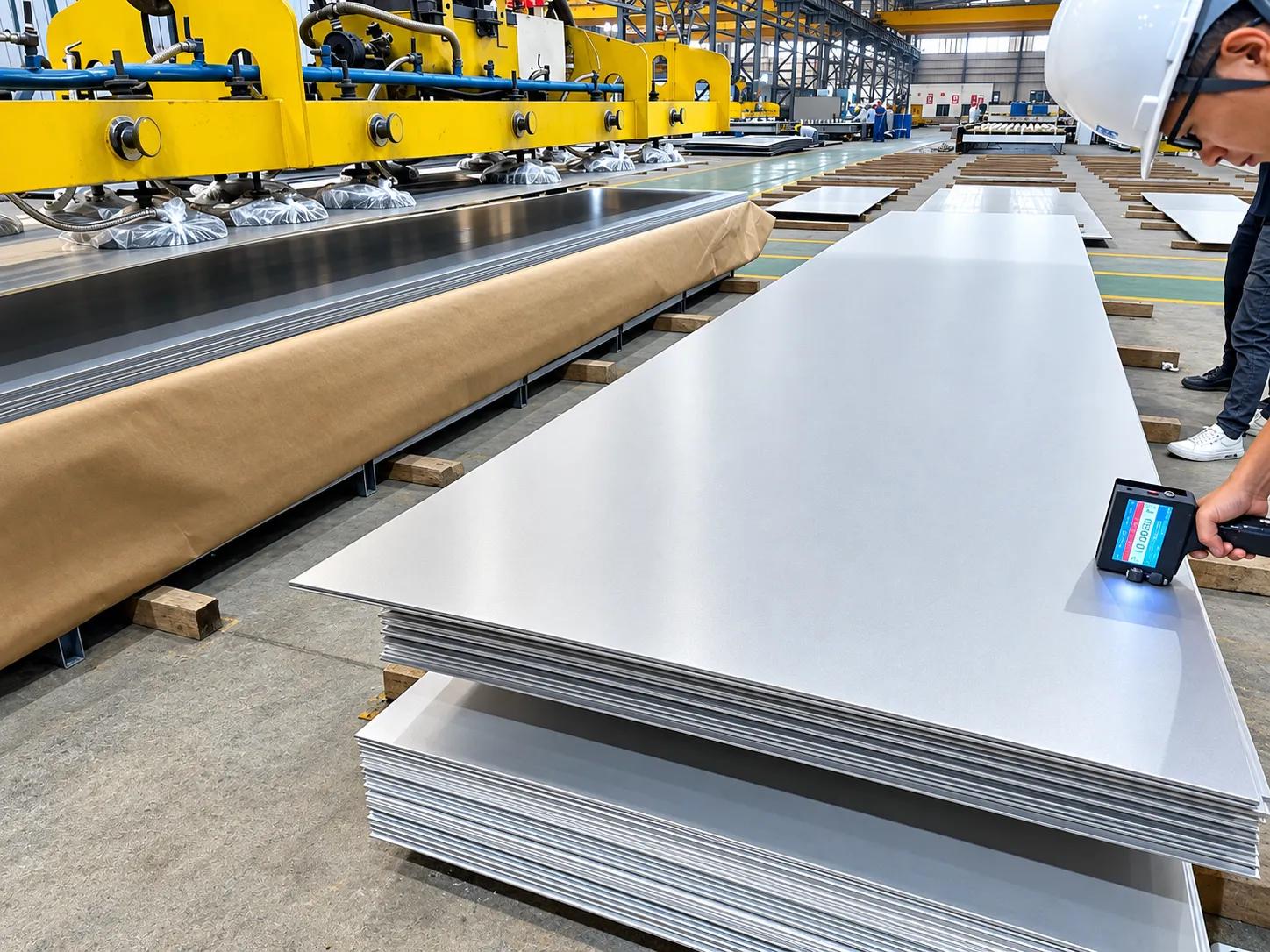
In modern industries, materials may not be able to satisfy the demands for durability, corrosion resistance, strength, and service life. Material properties under extreme conditions are required in aerospace systems, chemical processing equipment, marine installations, pharmaceutical machinery and special manufacturing. It is for this reason that Built for the Demanding Edge: Why Titanium Sheet Manufacturer Matter in Modern Industry is an important subject for the engineers, the architects, the contractors, the project managers as well as the industrial procurement teams. The excellent corrosion resistance, high strength-to-weight properties and performance under demanding conditions make titanium sheets a prized material. Based on different engineering and fabrication needs, the different sheets of titanium can be used. When it comes to selecting the right metal for large industrial projects, titanium isn't just a choice of high-quality metal. The important points that buyers should pay attention to include the titanium grade, thickness, dimensions, surface finish, applicable standards, fabrication requirements and operating environment. It can be matched with the application by experienced manufacturers.
Why Titanium Sheets Are Important for Modern Engineering
Titanium has very special physical and mechanical properties. It also offers a relatively low density compared to many high strength engineering metals, making it ideal for applications where weight is a critical design factor.
Meanwhile, titanium can offer superior corrosion resistance to a wide range of challenging applications.
Some important characteristics include:
High strength-to-weight performance
Excellent corrosion resistance
Relatively low density
Good resistance to seawater
Useful performance in many chemical environments
Availability in commercially pure and alloyed grades
Suitability for specialized fabrication
Long-term material durability when properly specified
The actual properties will vary with the grade and product condition. Thus, it is always advisable for the engineers to check the technical specifications before adopting the titanium sheets for any critical application.
Titanium Sheet Grades for Different Applications
One of the most crucial steps to take when buying titanium sheets is selecting the proper grade. The properties of various grades vary between combinations of strength, ductility, corrosion resistance and fabrication properties.
Titanium Grade 1
Commercially pure titanium of grade 1 has excellent ductility and good formability. It can be considered for applications where corrosion resistance and ease of forming are more important than very high strength.
Titanium Grade 2
Another commercially pure grade of titanium, Grade 2 is commonly used in industrial applications where a combination of strength, corrosion resistance, and fabrication properties are desired.
It may be used in:
Chemical processing equipment
Heat exchangers
Marine systems
Desalination equipment
Industrial fabrication
Corrosion-resistant components
Titanium Grade 5
Titanium alloy 5, also known as Ti-6Al-4V, is a high-strength alloy. It is especially used for aerospace, medical and special engineering applications where strength and relatively low weight are key considerations.
Grade selection should always be based on the conditions of the actual operating conditions and engineering requirements.
Advantages of Titanium Sheets for Industrial Applications
The reasons for the popularity of titanium sheets are their ability to fulfill a number of technical properties that are critical for the material.
Corrosion Resistance
Titanium will naturally form a layer of stable oxide, which is very corrosion resistant in many environments. This renders titanium as a particularly useful metal for certain chemical, marine, and industrial applications.
Strength and Weight Balance
Titanium may be a desirable combination of strength to weight ratio for applications where weight is a factor. This is helpful for aerospace and special engineering designs.
Long-Term Performance
Titanium can be used reliably over a long term at the proper grade and under proper operating conditions. This is significant for equipment that needs to be replaced or maintained often, but not easily.
Fabrication Flexibility
Appropriate cutting, forming, machining and fabrication processes can be used for the titanium sheet. Fabrication, however, must be performed carefully as this material needs the proper procedure.
Titanium Sheets in Aerospace and Transportation
Lightweighting is a high priority in the aerospace industry for achieving the necessary mechanical properties. Some aircraft and aerospace parts, therefore, are made from titanium alloys.
Titanium sheets can be considered for:
Structural components
Aircraft fittings
Engine-related components
Heat-resistant assemblies
Specialized aerospace fabrication
Other uses for titanium include in selected transportation and high performance engineering applications, where strength to weight deals are important.
For these applications, material traceability and certification are especially important. To avoid production delays, procurement teams should ensure that the material is correct to the specification prior to production.
Applications in Chemical and Marine Industries
Materials may be subject to corrosive conditions in a chemical processing environment, where corrosion resistance is an important factor. Equipment that requires resistance to certain chemicals may be constructed from titan.
Potential applications include:
Heat exchangers
Process equipment
Storage components
Piping-related components
Condensers
Desalination systems
Exposure of marine environments to sea water and also chloride environments also cause corrosion challenges. The corrosion resistance of titanium can be applied to certain marine components and equipment.
For specific chemical concentration, temperature, pressure and service environment, however, the compatibility of materials must always be verified.
Titanium Sheet Manufacturing and Quality Considerations
Quality is equally crucial for industrial buyers as the material is. When the thickness is not uniform, there might be surface imperfections, size changes, or insufficient documentation, which can lead to issues when it comes to fabrication.
Good titanium sheet manufacturers will focus on controlling the following characteristics:
Chemical composition
Sheet thickness
Length and width
Surface condition
Mechanical properties
Dimensional tolerances
Flatness
Material traceability
Other tests such as tensile testing, hardness testing, chemical analysis, and other inspections may be required depending on the specification and application.
Quality certificates and test reports can be used to ensure that the material supplied conforms to the agreed specification.
Choosing Titanium Sheet Thickness and Dimensions
One of the important factors to consider while choosing the titanium sheets is thickness. The optimum thickness will vary according to design, mechanical loading, method of manufacture, environment of corrosion and use.
Prior to ordering it is essential for the industrial buyers to specify:
Titanium grade
Sheet thickness
Width and length
Applicable standard
Surface finish
Required tolerances
Quantity
Fabrication requirements
Inspection requirements
Packaging and delivery specifications
It is best to have complete specification at the start of purchasing processes, which helps to minimize misunderstandings and enables manufacturers to provide the right material.
Why Indian Titanium Sheet Manufacturers Matter
The metal-processing and engineering manufacturing sector has a long pedigree in India and meets the requirements of the industry in the country as well as abroad. There are different grades, sizes, thickness, finishes and various custom-made specifications available to the experienced titanium sheet manufacturers in India, depending on their capacity.
There are several practical benefits to collaborating with an able Indian manufacturer for large businesses:
Access to multiple titanium grades
Customized dimensions
Bulk-order support
Quality inspection
Material certification
Export packaging
Technical assistance
Flexible procurement options
These features can streamline the sourcing process for construction and industrial procurement teams, especially if certain materials or documentation are required for a specific project.
Titanium Sheets for Specialized Construction and Architecture
Conventional construction projects have a wide range of needs and budgets, making it unlikely that they will be the first place where titanium is considered. In specialized applications like architecture and construction, however, the corrosion resistance, the appearance and the durability of titanium can be advantageous.
Potential applications can include:
Specialized exterior elements
Architectural cladding
Decorative surfaces
Marine-facing structures
Corrosion-resistant components
Specialized building features
Before specifying titanium, architects and contractors should consider the environmental exposure, the structure, the way it is to be fabricated, its appearance, and its life cycle.
How to Select a Reliable Titanium Sheet Supplier
There are cases where the selection of a supplier is more complex, such as on major industrial projects, where quotations are not the only factor to consider. The capacity, quality management, technical expertise, and delivery reliability of a supplier can impact project execution.
Before placing an order, consider:
Manufacturing experience
Available grades
Thickness and size range
Quality control procedures
Testing capabilities
Material certification
Customization options
Packaging standards
Production capacity
Delivery commitments
A good titanium sheet manufacturer should be able to give clear information about the product and the necessary documentation for the application.
Conclusion
Through their corrosion resistance, strength-to-weight ratio, durability, and unique fabrication capabilities, titanium sheets have proven to be precious commodities in today's industrial landscape. Titanium alloys can offer benefits over traditional materials in many applications, such as aerospace and chemical processing, marine engineering, and special construction applications.
Frequently Asked Questions
1. What are titanium sheets used for in modern industrial applications?
Titanium sheets are used in applications such as aerospace components, chemical processing equipment, heat exchangers, marine systems, desalination equipment, specialized machinery, and selected architectural applications.
2. How do I choose the right titanium sheet grade for chemical processing?
The correct grade depends on the chemicals involved, concentration, temperature, mechanical requirements, and fabrication method. Commercially pure grades such as Grade 2 are commonly considered for many corrosion-resistant industrial applications, but the exact material should be confirmed against the service conditions.
3. What should I check before buying titanium sheets from Indian manufacturers?
Buyers should verify the grade, thickness, dimensions, applicable ASTM or other specification, surface finish, tolerances, testing requirements, material certificates, packaging, and delivery schedule before confirming an order.