

Inside Aluminium Round Bar Manufacturing: From Raw Material Selection to Precision Engineering
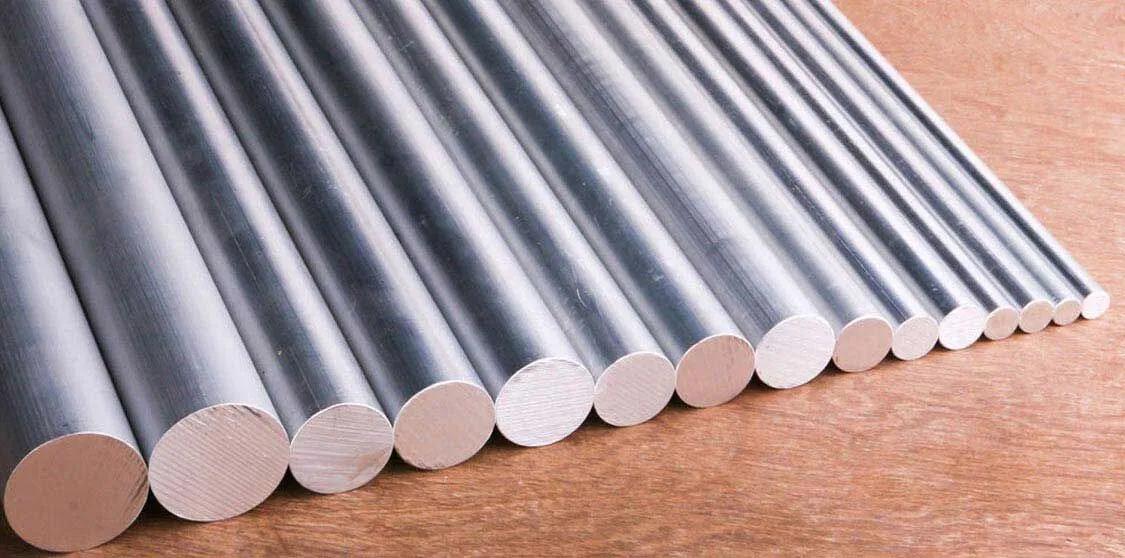

Grab an unsoiled, straight aluminum round bar and it appears easy! But there's a lot that can happen in the time between that bar becoming available for your workshop and it making smooth or troublesome lathe runs. Here's how a good bar is brewed.
It starts with the right raw material
All starts with the metal. Most quality bars are produced from primary aluminium ingots or cast billets and the alloying elements are added to achieve a particular grade. Melts of poor quality, containing impurities, may appear acceptable, only to turn out to be of poor quality.Low quality melts with impurities may appear acceptable on the surface but may result in poor surface finish, cracking, or variations in strength.
The alloy of the alloy is determined according to the task:
6061: the all-rounder. Excellent strength and corrosion resistance, and weldable and machineable.
6082: a bit stronger than the 6061, widely used in structural and engineering applications.
7075: high strength and commonly used for aerospace and defense.
Fatigue resistant, sometimes used in making aircraft components.
1100 and 3003: Easy to form for chemical and general fabrications.
Quality producers test the chemistry prior to the production of any bar. A spectrometer is used to prove that the magnesium, silicon, copper, zinc and others are within the norm. If they're not correct, the batch does not proceed.
Melting and casting
The raw material is fed in a furnace and is melted at about 700°C. Molten aluminium is able to easily absorb hydrogen and oxide particles and both are a source of bad spots later on. Therefore, degassing and filtering of the melt is done before the casting is performed, typically using inert gas and ceramic filters.
The clean metal is then poured into long cylindrical billets that are typically produced by direct-chill casting process. Here cooling rate is important. Faster cooling and uneven cooling leads to internal stress. If grain cools too slowly the grain structure becomes coarse. Some billets are also homogenised by heating for a few hours and thus smoothing out the internal structure of the metal so that it will respond in a predictable manner during the subsequent step.
Shaping the bar
Typically, round bars are extruded. The billet is reheated up to a soft, but not molten, state and subjected to a massive force as it is forced through a round die. Imagine pressing a tube of toothpaste but with several thousand tonnes of pressure!
Care has to be taken with the speed and temperature. If the pressure is too great, it can tear the surface. The press doesn't work well if running too cool. These variables are carefully monitored by experienced operators; sometimes small changes are detected in the product.
Some bars are then taken to the cold drawing stage, where they are passed through a smaller die, to achieve a closer fit. It increases the diameter tolerance, and results in a smoother and brighter surface.
Heat treatment and straightening
When freshly extruded bars are not at their best yet. Alloys such as 6061 and 7075 are heat treatable, and are treated to reach tempers like T6, through solution treatment, quenching and ageing. But it's here that the strength and hardness is actually created.
If the bar is bent it will be straightened after quenching. The bar is pulled back to true alignment with the use of stretchers and straightening machines. This is important because if you have ever placed a slightly bent bar in a CNC chuck, you'll understand.
Precision finishing
This is where it gets interesting and what sets an ordinary bar apart from a precision grade bar. Bars can be turned, ground or peeled to a precise diameter and tolerances. After that they are cut to length having clear square ends.
The quality of the surface is also taken into account. A quality bar will not be scratched, pitted, seamed or have any visible bar die lines. Depending on the use of the bar, a number of manufacturers will also provide anodised or mill finish finish.
Testing before dispatch
Quality control is not an end-of-the-line inspection. It guides through the entire process. Typical checks include:
Chemical composition analysis
The tensile strength, yield strength and the elongation testing are carried out.Both the tensile strength and yield strength and elongation testing are performed.
Hardness testing
The use of internal defect inspection by ultrasonics or eddy current.
These checks are performed to determine the dimensions of the product and its straightness.
The buyers should receive a mill test certificate with each batch to trace back to its source. Purchase it every time when it's a critical application.
Why it matters to buyers
Aluminium round bars are used in automotive parts, aircraft fittings, marine hardware, electrical parts, machinery shafts and a whole host of CNC-machined uses. In each case, there is some secret bug in them, resulting in scrapped parts, wasted machine hours, and late delivery.
Hence it is crucial to select the best trustworthy Aluminium Round Bar Manufacturer in India
as the price is not the only thing to consider. It's all about consistent chemistry, tolerances that will not vary, and correct documentation, and a supplier who knows what is in your product.
A few tips when ordering
Do specify the grade and temper. “6061” and “6061-T6” aren’t the same thing.
Make your tolerance needs known in the beginning. It impacts both the process and price.
Request Test Certificates. They will be provided by a serious supplier without hassle.
Check packaging. The bar can be accidentally scratched or bent during transit to the good bar.
If you are switching suppliers, be sure to try a small lot first.
Final thoughts
The selection of clean material, careful control of the melt and the extrusion, heat treatment, straightening and testing processes, are all important in ensuring that a good aluminium round bar is produced. If any of the above are cut short or rushed, it will become apparent later, typically at your shop floor.
When you compare suppliers, don't take the price on a "per kilo" basis. Interior, ask how the bar has been made, what is being tested and what documents accompany the bar. The responses will provide you with much of the information you will need.