

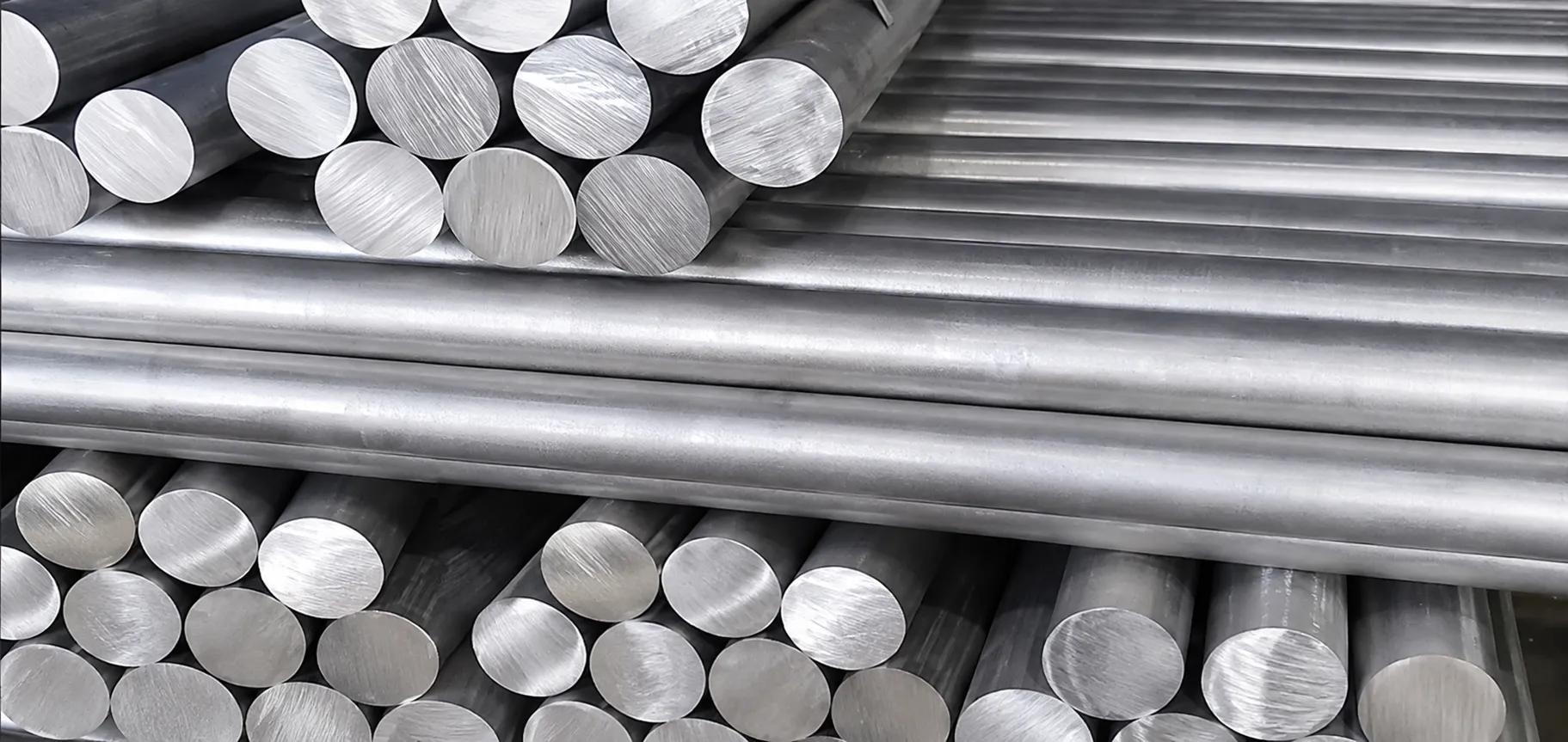
The current construction and manufacturing sector is more concerned with using materials that have more strength and less weight. In the construction, engineering, and architectural fields, engineers, architects, contractors, and procurement teams typically seek metals that are not only durable, but also easy to work with, machine, and install. Aluminium round bars meet this requirement nicely as they have the desirable features of light weight construction, corrosion resistance, ease of machining and strength. Strength Without Excess Weight: Exploring Aluminium Round Bar Manufacturer in India from India is the perfect way to delve into the benefits of these versatile materials in today's engineering and industrial landscape.Aluminium round bars are cylindrical shaped bars in various grades, diameters, lengths and surface finishes produced. But good performance requires the choice of the appropriate alloy, dimensions, manufacturing quality and specifications for a particular application.
What Makes Aluminium Round Bars a Practical Choice?
Aluminium round bars are generally used in a variety of applications where weight, durability and ease of fabrication are significant factors. Their properties allow them to be used for general and special engineering applications.
Key advantages include:
Lightweight compared with many conventional metals
Good strength-to-weight ratio
Natural corrosion resistance
Easy machining and fabrication
Good thermal conductivity
Good electrical conductivity
Recyclability
Low maintenance requirements
In the context of large-scale construction and manufacturing, these attributes lend aluminium to an efficient choice when the application is not concerned with density or characteristics of heavier metals.
Aluminium Alloy Grades for Different Applications
The alloy used has a significant impact on the performance of an aluminium round bar. The various grades have unique combinations of strength, corrosion resistance, machinability and formability.
Aluminium 6061
Aluminium 6061 is a common 6063 with an equilibrium combination of properties. It has good strength, corrosion resistance and good machinability that are suitable for many fabricated and machined components.
Common applications include:
Machinery components
Structural parts
Automotive components
Shafts and fittings
General engineering applications
Aluminium 6063
Aluminium 6063 has excellent surface finish and formability. It is frequently used in architectural uses, and for parts in buildings where appearance and fabrication are significant.
Aluminium 7075
For more critical engineering applications, aluminium 7075 may be used if greater strength is a requirement. It is typically used in the aerospace and high-performance components industries.
Always the proper alloy should be chosen based on the mechanical, environmental and fabrication requirements of an application.
How Aluminium Round Bars Are Manufactured
The entire manufacturing process of the round bar affects the quality of the bar, starting from the raw material.
Raw Material Selection
Aluminium or the appropriate aluminium alloy is the starting material for the manufacturers. It is important to control the chemical composition because the final properties of the material are directly affected by it.
Selecting proper raw materials, the following points can be achieved:
Consistent alloy composition
Predictable mechanical properties
Better surface quality
Reliable production results
Forming and Processing
Aluminium can be formed to a desired cylindrical profile by appropriate forming or extrusion processes, depending on the product and alloy.
By carefully controlling the manufacturing parameters, dimensional consistency can be maintained throughout the manufacturing process.
Cutting and Finishing
Standard bars of round bars can be provided, as well as cut to project specifications. Other finishing operations may be carried out such as straightening, machining, grinding or surface treatment.
When precision manufacturing is required, these operations can be of great value.
Inspection and Testing
Quality inspection is the process of checking the final product to ensure it is of acceptable quality.
Typical checks can include:
Diameter measurement
Length verification
Straightness inspection
Surface examination
Chemical composition testing
Mechanical property testing
For critical industrial projects, buyers should discuss applicable standards and testing requirements with the supplier before ordering.
Industrial Applications of Aluminium Round Bars
Aluminium round bars are versatile in their applications and can be used in various industries.
Construction and Architecture
These materials are typically chosen for their strength, weight, and resistance to the elements, making them ideal for construction and architectural applications.
Aluminium round bars may be used in:
Railings
Supports
Architectural components
Frameworks
Fabricated structures
Decorative elements
They can be especially beneficial for applications that are subject to moisture and outdoor elements.
Automotive and Transportation
A critical aspect in the design of modern transportation systems is to minimize the weights of vehicles. The round bar of aluminium can be processed into different parts, and the advantages of its weight and material make it suitable for use in different parts.
Potential applications include:
Shafts
Pins
Bushings
Mechanical components
Vehicle fittings
Transportation equipment
Industrial Machinery
Aluminium round bars can be used as raw material for precision-machined parts.
They may be converted into:
Spacers
Shafts
Rollers
Pins
Bushings
Machine components
They are easy to machine, which benefits the manufacturers in making the components.
Electrical Applications
The electrical conductivity of aluminium is beneficial in some electrical and power applications. Aluminium round bars can be applied into certain conductive parts and devices according to different technical needs and requirements of the alloy.
Why Weight Reduction Matters in Engineering
Weight isn't just a shipping or freight problem. When designing a structure, it is important to consider the weight of the structure, as it can impact the structure's strength and its installation.
In general, the use of aluminum can provide a number of advantages when used as a technically appropriate material:
Easier handling during installation
Reduced component weight
Lower transportation burden
Improved design flexibility
Easier machining and fabrication
These factors can be especially useful for architects and contractors in the design of structures or systems where the efficiency of handling and installing materials is a concern.
Importance of Dimensional Accuracy
When buying aluminium round bars, industrial buyers should take note of the dimensional accuracy. bars that are not the correct diameter or straightness may cause problems when being machined or assembled.
Consistent dimensions help manufacturers achieve:
Better machining accuracy
Reduced material waste
Easier component assembly
Consistent finished products
More predictable production schedules
That's why it's essential to partner with a professional Aluminium Round Bar Manufacturers in India for businesses that have specific requirements.
Choosing Aluminium Round Bars from India
India boasts a growing manufacturing and engineering industry to meet the nation's needs and demand for aluminium products. Established manufactures in India can offer different grades, dimensions, customization and bulk supply options to large industrial buyers.
When evaluating suppliers, consider:
Manufacturing experience
Alloy grade availability
Diameter and length range
Quality-control procedures
Testing capabilities
Customization options
Production capacity
Packaging standards
Delivery reliability
Technical support
It is just as critical that a supplier understands a project as it is that he or she has the manufacturing capacity to produce it.
Customized Aluminium Round Bar Solutions
Not all engineering projects will need the same product. A contractor might want certain lengths and a machining company might want a certain diameter and alloy.
Depending on manufacturing capabilities, customized solutions may include:
Specific diameters
Custom lengths
Precision cutting
Different alloy grades
Surface finishes
Bulk production
Project-specific packaging
If a detailed specification is given at the quotation stage, the supplier will be better informed about the application and made able to make a suitable recommendation.
How to Get Better Value from Aluminium Round Bars
It is not always the cheapest initial price that is the most cost effective procurement. The project cost can be influenced by the quality of the product, consistency, reliability of the delivery, and its suitability to the application.
Businesses can improve procurement decisions by:
Clearly defining technical specifications
Selecting the correct aluminium grade
Comparing quality documentation
Checking dimensional tolerances
Confirming production capacity
Planning bulk requirements in advance
Evaluating delivery schedules
Making the right choice of aluminium round bar can lessen the need for replacement, material waste and machining hassle.
Conclusion
Aluminium round bars show the power of modern engineering designing a product which is useful, strong and durable without necessarily using heavier materials. They have a light weight property, corrosion resistance, can be machined, are conductive, versatile, and are used in the construction industry, architecture, transportation, machinery, electrical applications and many other industries.
We discussed the advantages of Aluminium round bars, the most popular alloy grades, manufacturing process, industry applications, dimensional accuracy, customization and other factors considered while choosing suppliers. Aluminium Round Bar Manufacturers in India can be helpful to the businesses in offering them various material grades, sizes, finishes, and customized solutions based on their project requirements.Aluminium round bars show the power of modern engineering designing a product which is useful, strong and durable without necessarily using heavier materials. They have a light weight property, corrosion resistance, can be machined, are conductive, versatile, and are used in the construction industry, architecture, transportation, machinery, electrical applications and many other industries.
FAQs
What are aluminium round bars commonly used for in industrial applications?
Aluminium round bars are commonly used for shafts, pins, bushings, spacers, machine components, architectural parts, supports, automotive components, and fabrication applications.
Which aluminium alloy is suitable for manufacturing round bar components?
Aluminium 6061 is widely used for general engineering and machined components, while 6063 is often selected for applications requiring good surface finish and formability. Aluminium 7075 may be considered for higher-strength applications.
What should I consider when buying aluminium round bars from India?
Consider the required alloy grade, diameter, length, dimensional tolerances, surface finish, applicable standards, quality testing, customization capabilities, production capacity, and delivery reliability.